
Sokwe: Look Human
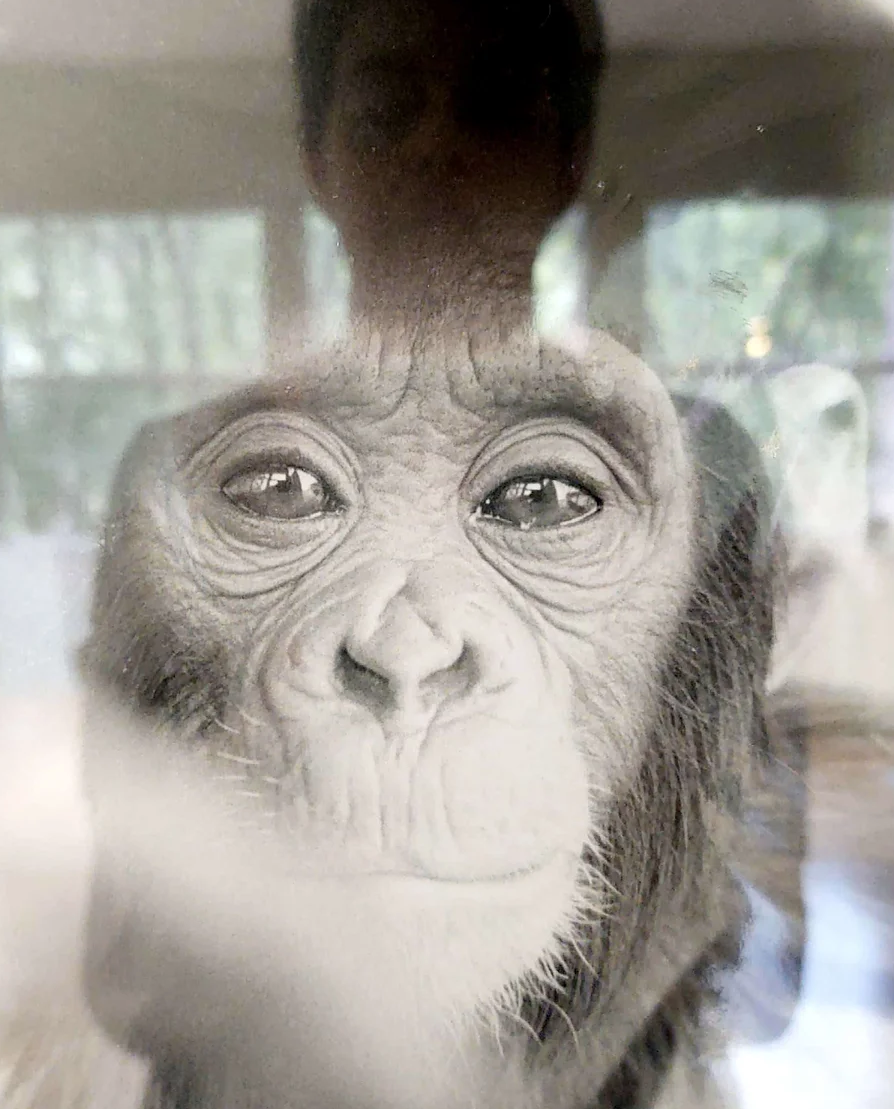
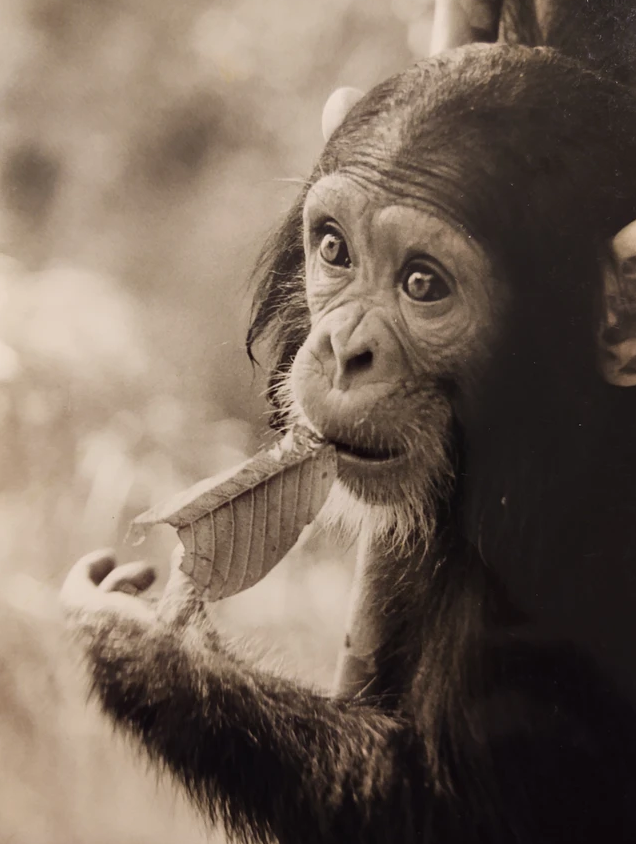
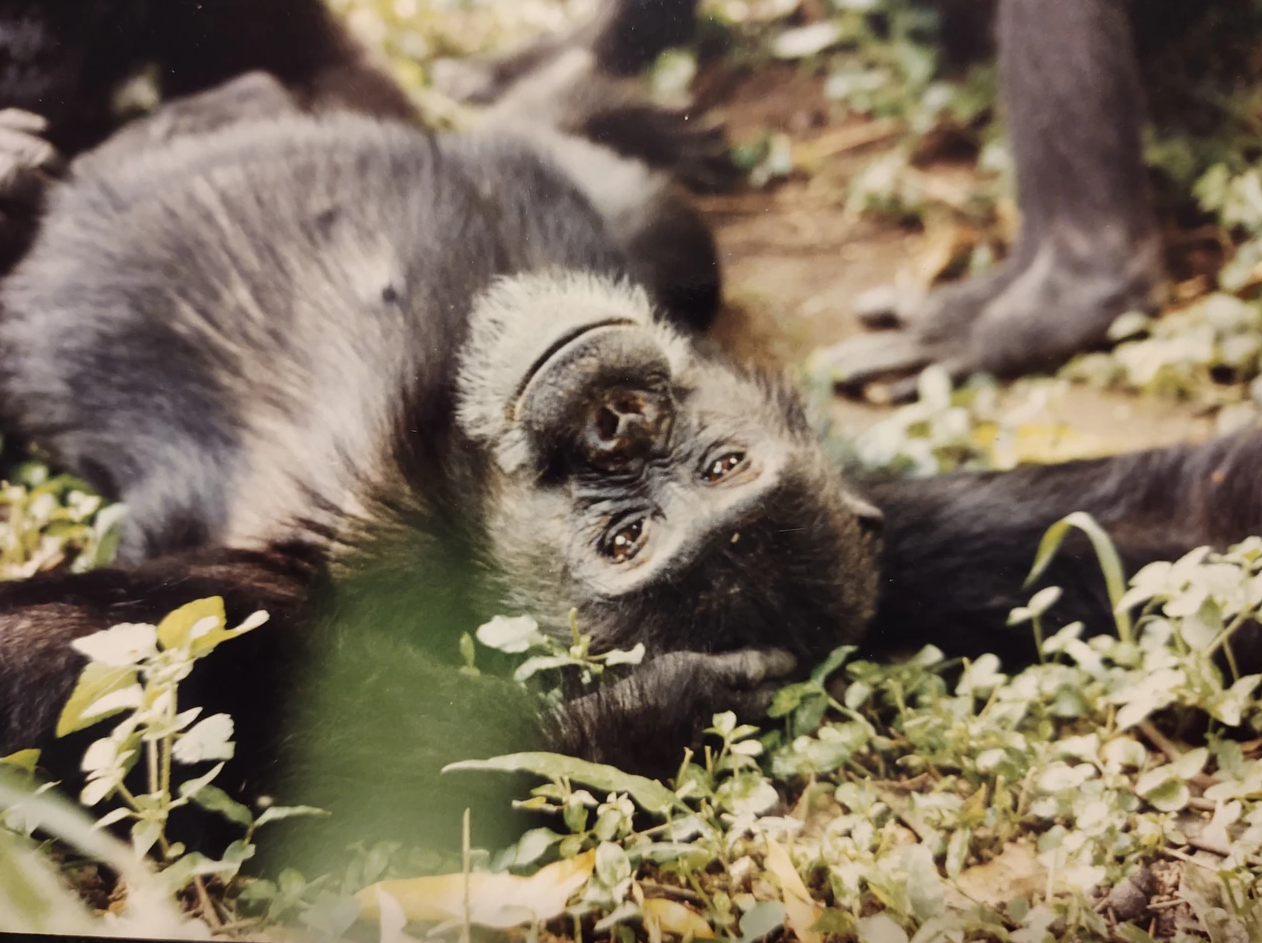
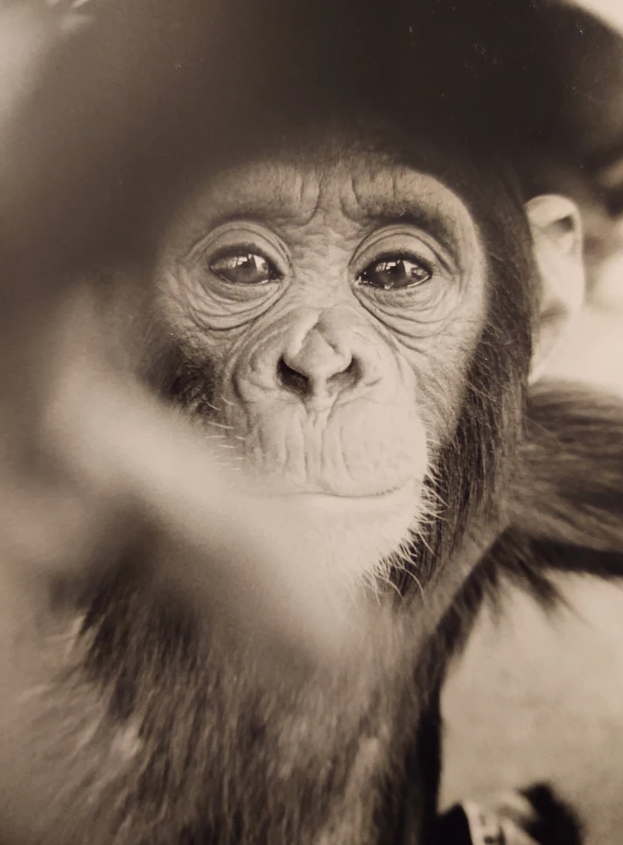
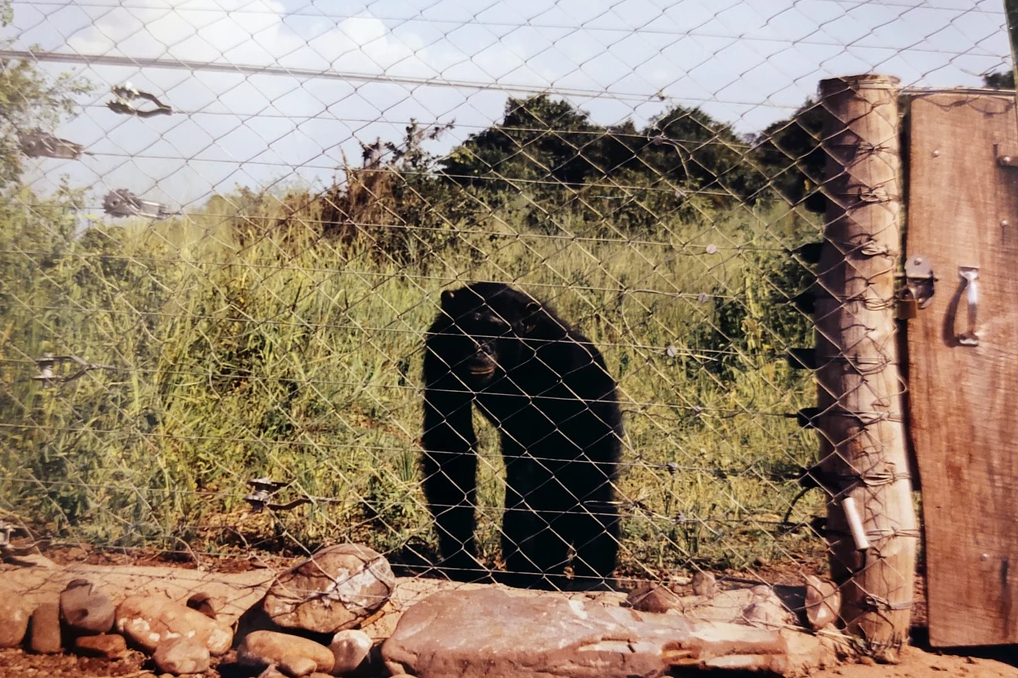
Sokwe: Look Human tells a personal story of the extraordinary experience of caring for five wild, orphaned chimpanzees in Tanzania, East Africa. Through an immersive, multimedia performance with live soundscaping, storytelling, and choreography, it invites audiences to examine what it means to be human, seem human, make a humanistic choice… and what it means to face extinction.
Sokwe: Look Human
Written & Directed by Andrea Assaf
Recipient of the Playwrights’ Center’s 2026 McKnight National Residency & Commission
Collaborating Artists:
Choreographer / Performer – Wanjiru Kamuyu
Vocalists – Jonathan Hart Makwaia & Mankwe Ndosi
Media Designer – Eva Auster
The Story…
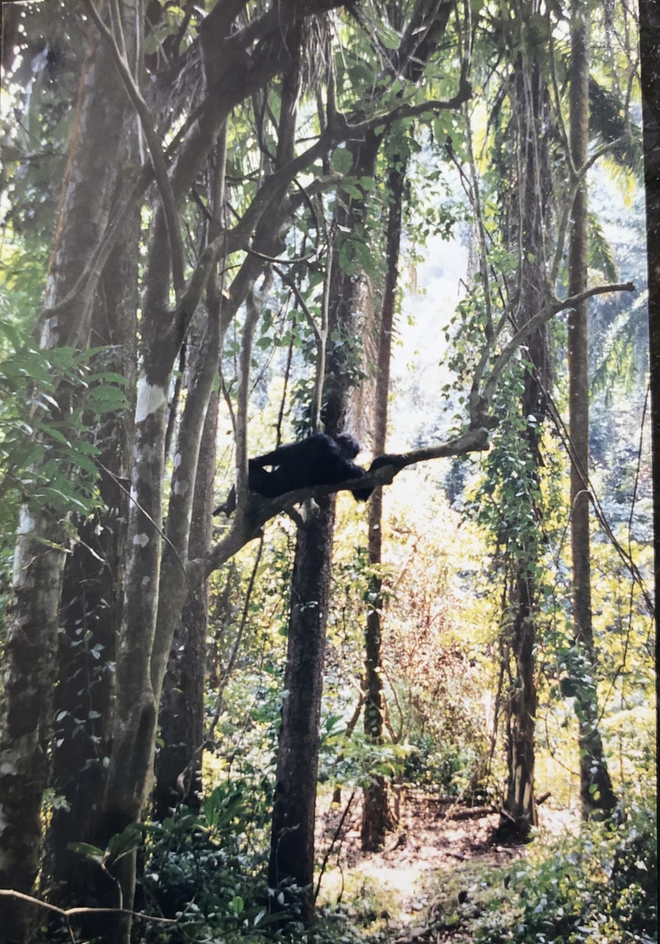
In 1994, Andrea took a break from her theatre training in New York to study wildlife conservation in Tanzania, East Africa. During this time, she traveled to one of the most remote national parks in the world, and lived for a month in the Mahale Mountains—home to nine wild primate species, including chimpanzees. Then she volunteered for the Jane Goodall Institute.
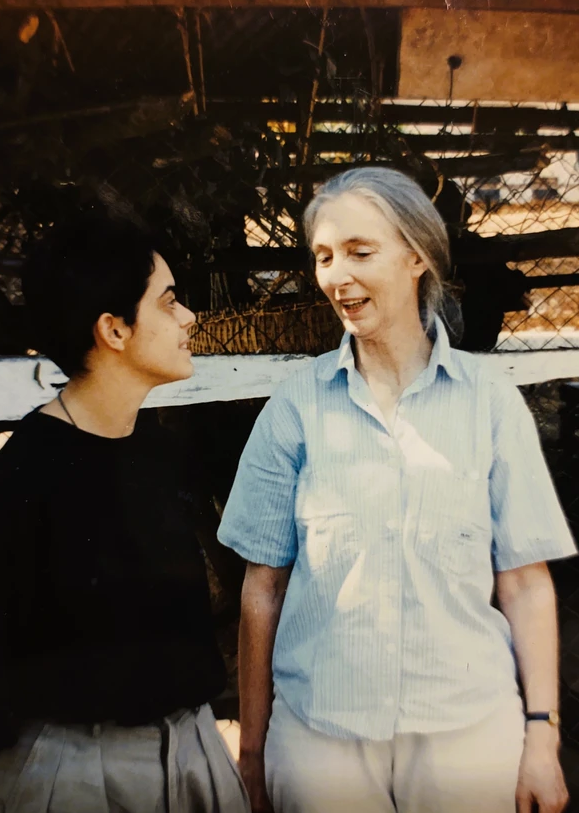
Andrea met Dr. Jane on several occasions. She had tea on the back veranda of Dr. Jane’s house in Dar es Salaam. She visited Dr. Jane’s research camp in Gombe Stream National Park. She watched this international icon—a woman who literally changed the world’s definition of what it means to be human—tell stories, charm everyone with her wit, and work tirelessly for a better future, for all of us. Andrea’s job: to care for five young chimpanzees that had been confiscated from an illegal trade shipment of exotic animals. For six months, she worked closely with researchers, conservationists, and local laborers, until land for a sanctuary could be secured…
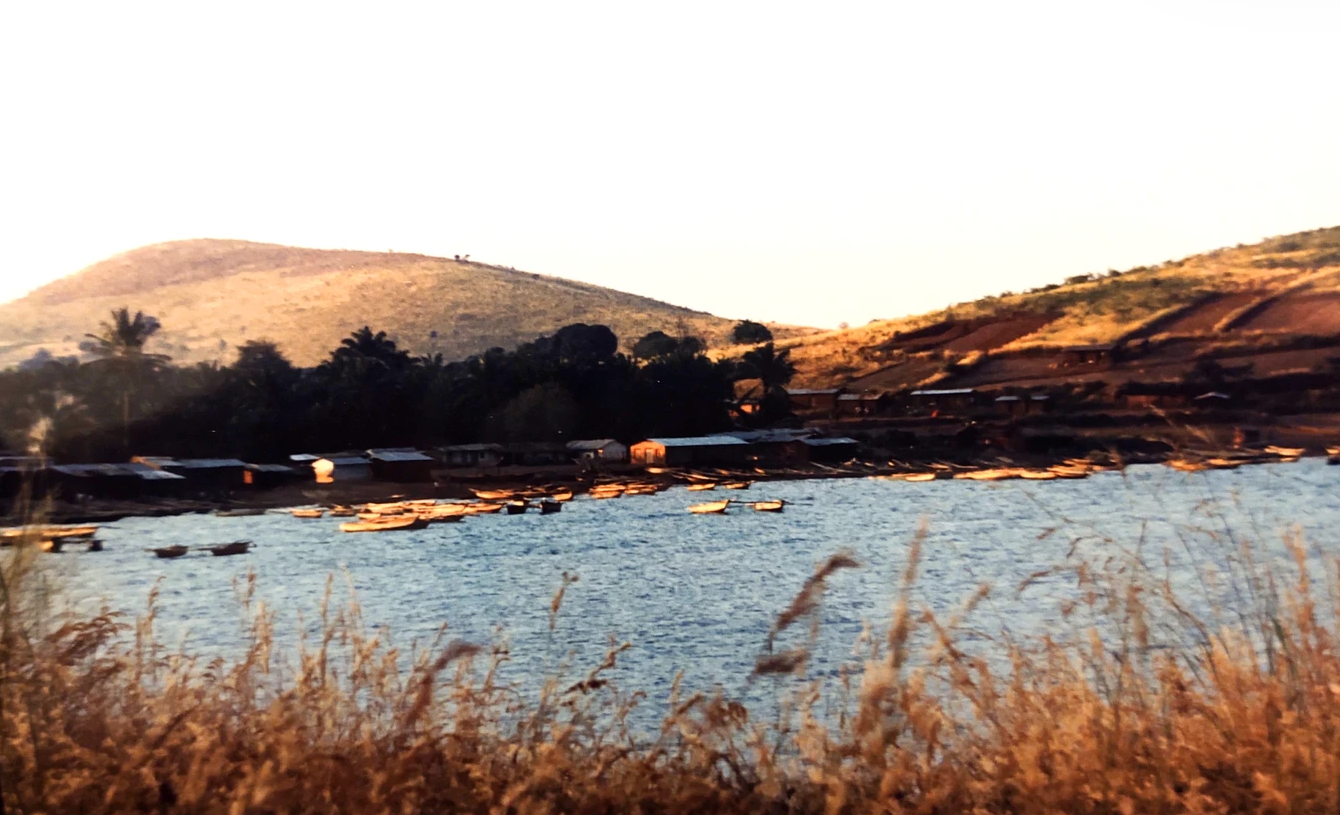
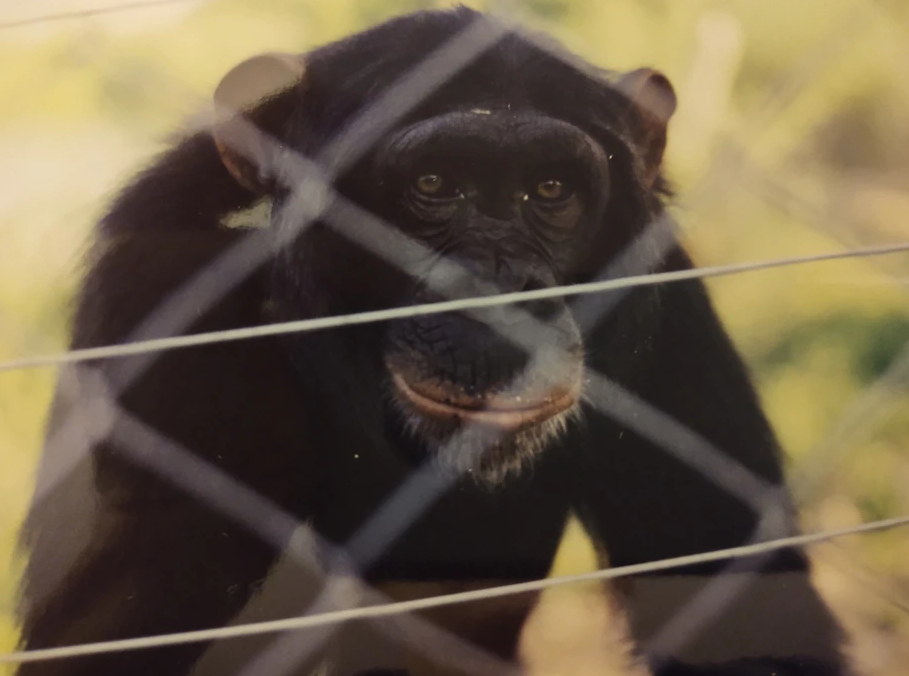
Meanwhile, in 1994, the Rwandan genocide was unfolding. It was very difficult to get news of what was happening. English-language news channels were more interested in the OJ Simpson trial than the genocide. Small boats packed beyond capacity with refugees escaping the war arrived every day on the shore of Lake Tanganika, where Andrea worked in a human-sized cage with the chimps.
There it was: the edge of life and death. Survival and extinction. Humanity and inhumanity. All at once.
The Kiswahili term for “chimpanzee” is Sokwe Mtu, which translates literally to English as “looks human.” (Sokwe translates to Spanish as “parece,” although in English there is no single word for “looks like” or “appears to be” or “appears as.”) Mtu is the Kiswahili word for man, person, or human. The play will tell a very personal story of the extraordinary experience of living with and caring for five wild, orphaned chimpanzees. It will also examine what it means to be human, to appear human, to make a humanistic choice… and what it means to face extinction.
The Play: New Work in Development
Sokwe: Look Human will be an environmentally staged performance with live music and choreography that invites embodied experience. Audience-participants will enter, surrounded by an immersive projection design that transports us to the environments where the story takes place: a mountain forest, a human-sized cage, an outdoor market in a red-clay town... The Storyteller will be played by performers, 30 years apart: the young artist awakening to the profound experience of personal relationship with other apes, and the urgent need to save them; and her older self, looking back from the future, knowing what will come. Along the way, we’ll meet a Tanzanian woman who embodies a different perspective—a human-centered one, having lived through colonialism and its contemporary impact—who questions the values at the very core of Euro-American conservation.
As we journey, we’ll encounter life-size projections of chimpanzees and interviewees: primatologists, conservationists, and land rights activists. We’ll encounter multiple languages, including English, Kiswahili, and indigenous languages. Data visualization will be layered with documentary footage, and digital animation by media artist Eva Auster. The soundscape will highlight experimental voice, with ancestral and contemporary music co-created by Tanzanian American vocalists/composers Jonathan Hart Makwaia and Mankwe Ndosi. East African characters will be performed by Kenyan-French/American choreographer Wanjiru Kamuyu. Together, we will invite interactivity on all levels: through technology, vocal improvisation, and movement.
Meet the Artists:
The Research
The survival of a species depends on the preservation of the ecosystem that makes life possible. Global scientific consensus states that Earth is currently in the midst of the Sixth Mass Extinction, driven by human pollution, habitat destruction, and climate change. Species are vanishing at rates far exceeding normal geological levels, threatening entire ecosystems, and potentially humanity itself. The severity of recent biodiversity loss suggests that we are approaching a major extinction event comparable to the past "Big Five," potentially more extreme than the end of the dinosaurs, or worse than the Permian extinction—"The Great Dying." We, as humans, are at an existential crossroads.
This projectlives at the intersection of science, art, and politics. Research will include the archives of Dr. Jane Goodall, and interviews with primatologists and conservationists, from Tanzania to Turtle Island. It looks back 25+ years at the status of chimpanzees – the species most closely related to humans – as an endangered species, and what has changed.
The process will also include dialogues and interviews as human rights advocates and indigenous leaders of Land Back movements globally – revealing the contradictions and collisions that often arise between wildlife conservation and human rights in a post-/neo-colonial context. The intention is to spark dialogue and action on justice-centered environmental protection, addressing both climate crisis and indigenous rights.
Ultimately, Sokwe: Look Human explores what it means to be endangered – both in an ecological sense, and a political one – and what it will take to survive.
***
Sokwe: Look Human by Andrea Assaf is commissioned and developed with support from the Playwrights’ Center’s McKnight National Residency and Commission Program, St. Paul, MN.